
1. Project Introduction
1.1 Background
Transport Service Operators (TSOs) — including commercial drivers of taxis, buses, trucks, motorcycles, and three-wheelers — play a critical role in the movement of people and goods across West Africa. However, they are also disproportionately represented in road traffic crashes due to high exposure, unsafe driving behaviors, poor vehicle maintenance, weak regulatory compliance, and limited access to structured road safety training.
In Liberia, road crashes involving TSOs are frequently linked to:
- Speeding and reckless driving
- Driving under the influence (DUI)
- Non-use of seatbelts and child restraint systems
- Poor understanding of traffic signs and regulations
- Unsafe interaction with pedestrians, cyclists, and two- and three-wheelers
- Inadequate post-crash response and first aid knowledge
While past road safety trainings have shown positive effects, many interventions remain one-off, externally driven, and unsustainable. There is limited institutional capacity within transport unions and associations to continuously train their members.
1.2 Problem Statement
The absence of a standardized, institutionalized training system for transport service operators has resulted in inconsistent road safety knowledge among drivers, weak peer accountability within transport unions, limited enforcement of professional driving ethics, and persistent unsafe road user behavior.
Without a sustainable capacity-building model, improvements in driver behavior are short-lived — and road safety risks remain unacceptably high.
2. Project Goal & Objectives
2.1 Overall Goal
To reduce road traffic crashes, injuries, and fatalities involving transport service operators by institutionalizing road safety training through a Trainer of Trainers (ToT) model — embedding training capacity directly within transport unions and associations for long-term sustainability.
2.2 Specific Objectives
- Develop a standardized road safety training curriculum for transport service operators, covering all key risk areas and behavioral competencies.
- Train and certify a cadre of master trainers drawn from transport unions and associations, creating a self-sustaining peer-training ecosystem.
- Strengthen knowledge and skills on defensive driving, traffic law compliance, and vehicle safety across the transport sector.
- Improve transport operator behavior toward pedestrians, cyclists, and vulnerable road users, reducing conflict and crash risk.
- Enhance capacity in first aid, post-crash care, and emergency response coordination to reduce crash fatality rates.
- Promote professional driving ethics and compliance with the Vehicle and Traffic Law of Liberia and equivalent national legislation.
3. Project Approach & Methodology
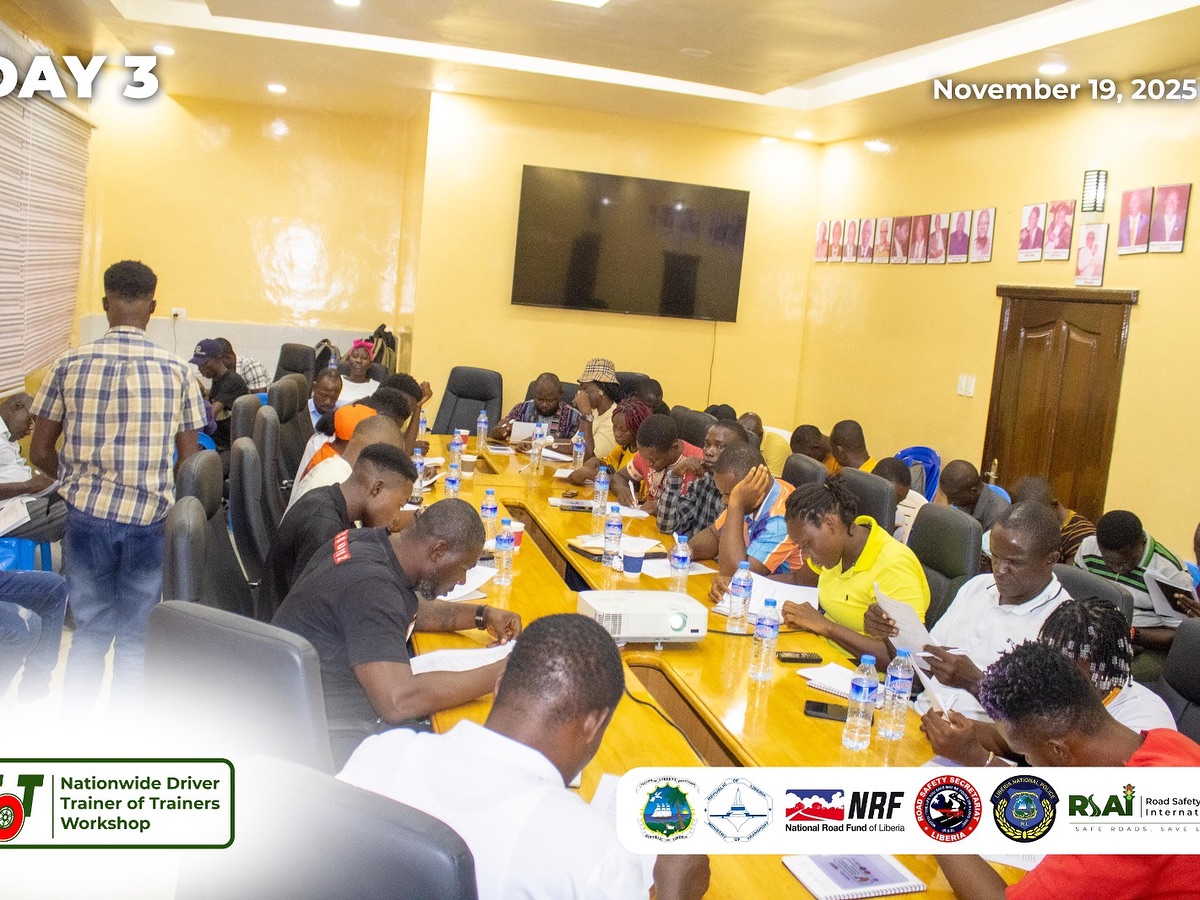
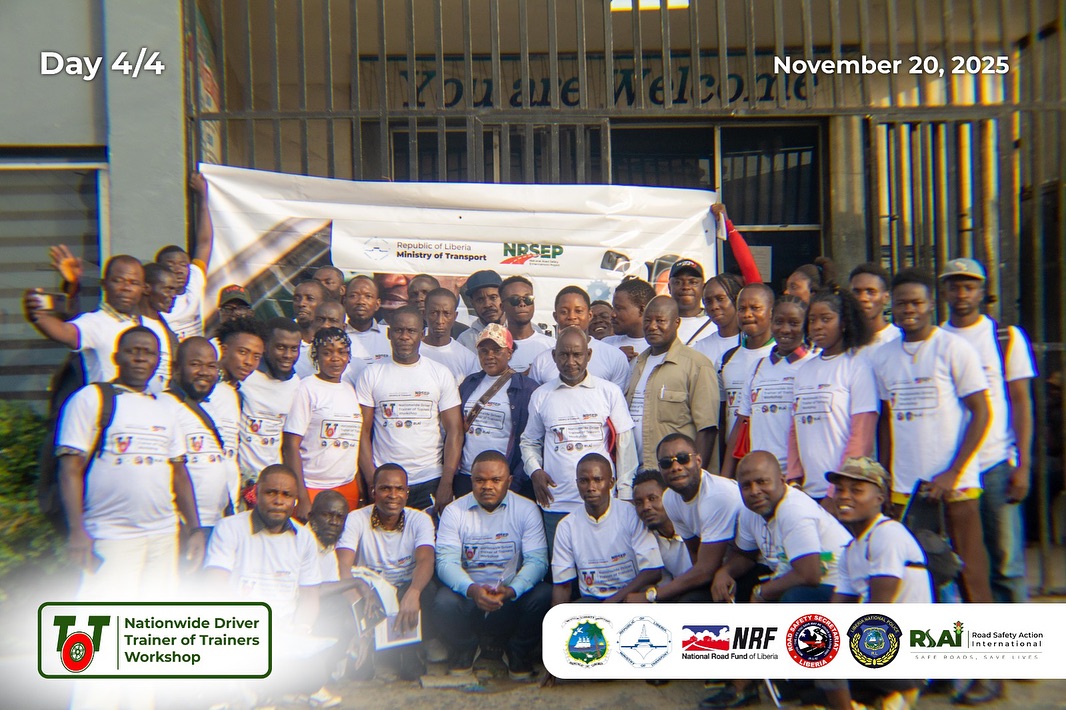
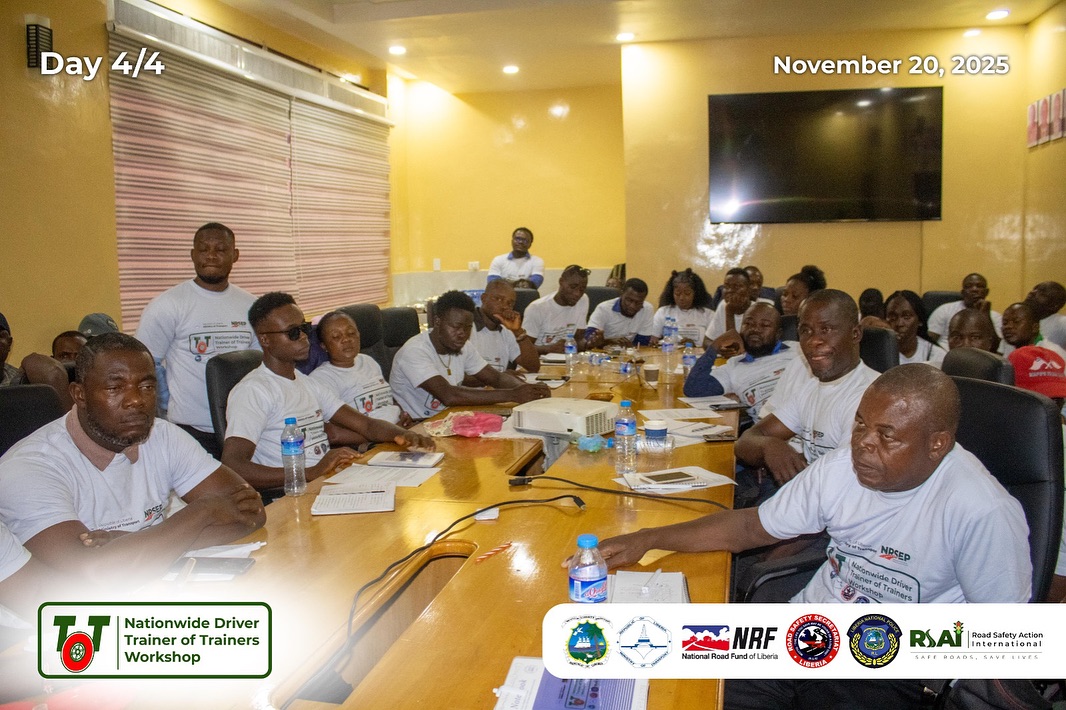
The TSO–ToT project adopts a Trainer of Trainers (ToT) methodology, ensuring sustainability through peer-led, union-based training delivery. Rather than relying on external facilitation alone, the programme builds a cadre of certified master trainers drawn from within transport unions themselves — creating an internal training engine that continues long after the programme's direct implementation period.
4. Training Curriculum & Content Areas
The ToT curriculum covers the following six thematic content areas, designed to build comprehensive competence across all key road safety risk factors relevant to transport service operators:
4.1 Core Road Safety Knowledge
- General road safety principles
- Five pillars of road safety
- Five key risk factors: speeding, DUI, helmets, seatbelts, child restraints
- Same road, same rule, same rights
4.2 Driver & Operator Behavior
- Defensive driving techniques
- Driving ethics and professional behavior
- Blind spots and critical spots
- Rear-end and side-end collision prevention
- Special zone driving: schools, markets, work zones
- Road-type-specific driving behavior
4.3 Traffic Regulation & Compliance
- Vehicle and Traffic Law of Liberia
- Driver licensing requirements
- Vehicle registration and roadworthiness
- Traffic signs and road signs interpretation
- Role of National Police and Road Safety Secretariat
4.4 Vehicle Safety & Maintenance
- Basic vehicle maintenance practices
- Pre-trip inspection checklist
- Identifying road defects and vehicle-related risks
- Roadworthiness standards and documentation
4.5 Vulnerable Road Users
- Pedestrian safety and rights
- Two- and three-wheeler interactions
- Sharing road space safely
- Special considerations for school zones and markets
4.6 Emergency Response & Post-Crash Care
- First aid basics for crash scenes
- Post-crash care and scene management
- Coordination with emergency responders
- Role of the National Public Health Institute
5. Organization & Staffing
Implementing Organization: Road Safety Action International (RSAI)
RSAI coordinates with a broad network of institutional partners to ensure programme credibility, access, and sustainability:
| Role / Actor | Function |
|---|---|
| Lead Trainers & Facilitators | Deliver the ToT curriculum, facilitate master trainer development, and provide ongoing mentoring and quality assurance |
| Certified Master Trainers | Trained and certified by RSAI; responsible for cascade training delivery within their unions and associations |
| Transport Unions & Associations | Nominate candidates for master trainer selection; provide venue and logistics support; lead internal cascade training rollout |
| National Road Safety Secretariat | Policy coordination, national alignment, and certification endorsement |
| Liberia National Police | Support on traffic law content, enforcement context, and practical compliance training |
| Emergency Response Institutions | Contribute to first aid and post-crash care training content and practical demonstrations |
| M&E Officer | Pre/post assessments, data collection, performance tracking, and MEL reporting |
| Service Providers & Partners | Provide curriculum support, printing, venue, and logistical services |
6. Implementation Arrangements & Schedule
The TSO–ToT project is implemented in five sequential phases, designed to build from foundation to full cascade delivery. Training locations are selected in consultation with unions and partners to ensure accessibility for participants.
-
1Curriculum Development & Stakeholder Coordination Finalize the standardized ToT training curriculum; conduct stakeholder consultations with transport unions, the National Road Safety Secretariat, National Police, and emergency response institutions. Agree on training venues, schedules, and trainer selection criteria.
-
2Selection & Training of Master Trainers Work with transport unions to identify and select master trainer candidates. Deliver intensive ToT training covering all six curriculum content areas alongside adult-learning facilitation techniques, scenario-based instruction methods, and quality assurance practices.
-
3Certification of Trainers Conduct formal assessments of master trainers. Issue RSAI-certified ToT credentials to qualifying trainers, creating an official and credentialed training cadre within each participating transport union.
-
4Cascade Training Rollout to Transport Operators Certified master trainers deliver road safety training sessions to their fellow transport operators within unions and associations, supported by RSAI mentoring, materials, and quality oversight. This phase dramatically multiplies programme reach at low marginal cost.
-
5Monitoring, Evaluation & Learning RSAI conducts structured MEL activities throughout implementation — including pre/post assessments, field observations, cascade session monitoring, and final outcome evaluation — to document results, identify lessons, and inform programme improvement.
7. Monitoring, Evaluation & Learning (MEL)
RSAI's MEL system for the TSO–ToT project tracks performance at all levels — from training outputs to behavioral change outcomes. Key indicators include:
Financing Strategy
8. Project Log Frame — Outputs, Outcomes & Impact
| Level | Statement | Indicators | Means of Verification |
|---|---|---|---|
| Impact | Reduced road traffic crashes, injuries, and fatalities involving transport service operators; improved safety for pedestrians and vulnerable road users; sustainable, union-led road safety education system | % change in TSO-related crash incidents over 3 years; % of participating unions sustaining training delivery independently | National crash databases; union training records; road safety authority reports |
| Outcome 1 | Improved road user and transport operator behavior among trained TSOs | % improvement in post-training knowledge and attitude scores; observed behavior change in target areas | Pre/post assessments; field observation reports; cascade session records |
| Outcome 2 | Increased compliance with traffic regulations among participating TSOs | % of trained TSOs demonstrating compliance with key traffic law provisions (seatbelts, helmets, speed) | Field observation data; enforcement agency records; union feedback |
| Outcome 3 | Strengthened institutional capacity within transport unions to deliver ongoing road safety training | Number of unions with certified master trainers conducting independent cascade sessions at 6 and 12 months post-certification | Union training logs; RSAI quality assurance visit reports |
| Output 1 | Standardized ToT curriculum developed and approved | Curriculum documented, reviewed, and adopted | Curriculum documentation; stakeholder sign-off records |
| Output 2 | Master trainers trained and certified by RSAI | Number of trainers certified per union per country | Training records; certificate register; assessment results |
| Output 3 | Transport unions equipped to deliver ongoing road safety training independently | Number of unions with functional training capacity; training materials distributed | Union capacity assessments; materials distribution records |
| Output 4 | Cascade training sessions delivered to transport operators by certified master trainers | Number of cascade sessions conducted; number of TSOs trained | Session reports; attendance registers |
| Output 5 | MEL system operational and reporting on programme outcomes | Reports submitted per schedule; data quality assured | MEL reports; stakeholder and donor reports |
| Activity 1 | Develop and finalize the standardized ToT curriculum | Curriculum produced and approved by stakeholders | Curriculum documentation |
| Activity 2 | Conduct stakeholder coordination with unions, NRSS, police, and partners | Coordination meetings held; agreements reached | Meeting minutes; MOU / agreement records |
| Activity 3 | Select and train master trainers from transport unions | Trainers selected and ToT programme completed | Training reports; attendance records |
| Activity 4 | Assess and certify master trainers | Trainers assessed; certificates issued | Assessment records; certificate log |
| Activity 5 | Support cascade training rollout to transport operators | Sessions conducted; operators trained | Cascade session reports; attendance registers |
| Activity 6 | Conduct MEL activities, documentation, and reporting | Reports submitted on schedule; final evaluation completed | MEL reports; donor reports |
Conclusion & Our Commitment
Every master trainer certified is a multiplier — reaching dozens of drivers beyond direct programme reach.
Every transport union with training capacity is an institution that sustains safety from within.
Every TSO who understands the road is a driver less likely to cause a preventable crash.
The TSO–ToT project is a sustainable, scalable, and cost-effective approach to improving road safety among transport service operators —
embedding training capacity where it matters most: within the unions themselves.
Partner With Us
We welcome partnerships with organizations committed to professional transport safety and sustainable capacity building:
Together, we can build a transport sector where every driver is trained, every union is empowered, and every road is safer.